3D printing can be a useful tool to integrate into learning due to it’s high draw-in of engagement, intersection of STEM capabilities as well as providing an opportunity for authentic contexts and application of learning (Novak & Wisdom, 2018; Kaya, Newley, Yesilyurt & Deniz, 2019; Trust & Maloy, 2017; Henrikson, 2017).
Trust and Maloy (2017) explore the connections between 3D printing projects and 21st-Century skills including creativity, problem solving, self-directed learning and technology literacy. They note its’ growing application in prototyping and production, especially connected to design opportunities in an educational setting (Trust & Maloy, 2017). The creative opportunities are extensive; from reproducing historical artefacts to creating art instillations and cell models (Trust & Maloy, 2017). 3D printing can illicit constructivist learning experiences where students experience STEM concepts through building, testing, and other elements of the design thinking process (Trust & Maloy, 2017).
Design thinking is a critical and creative process that involves the generation of ideas, structuring and reorganising such ideas and making decisions and modifications all whilst gaining and applying knowledge (Henrikson, 2017). Authentic contexts and purposes are an important element of completing a design thinking project. Challenges and projects that allow for use of 3D construction programs and 3D printers boost this real-world application whilst catering to design thinking process throufh defined problems, options for multiple solutions and optimisation of design and prototype (Kaya et.al., 2019; Hendrikson, 2017).
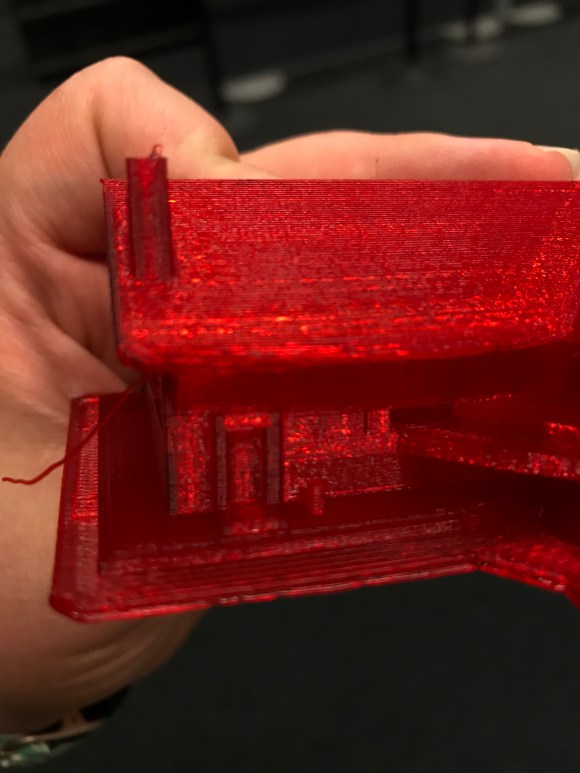
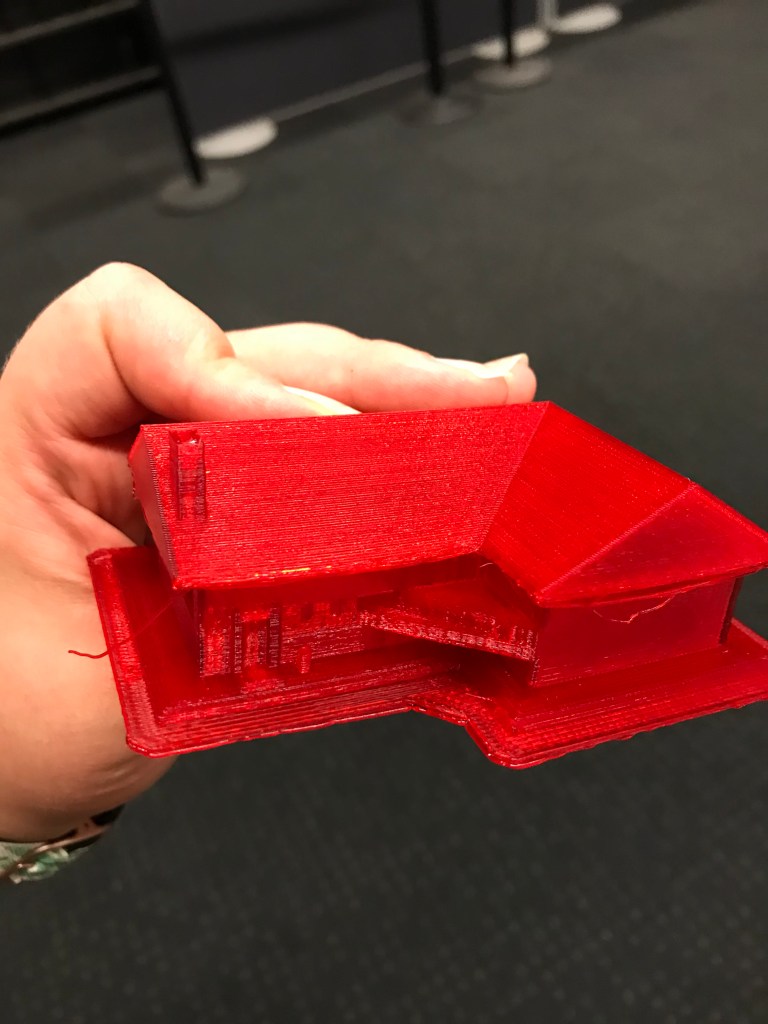
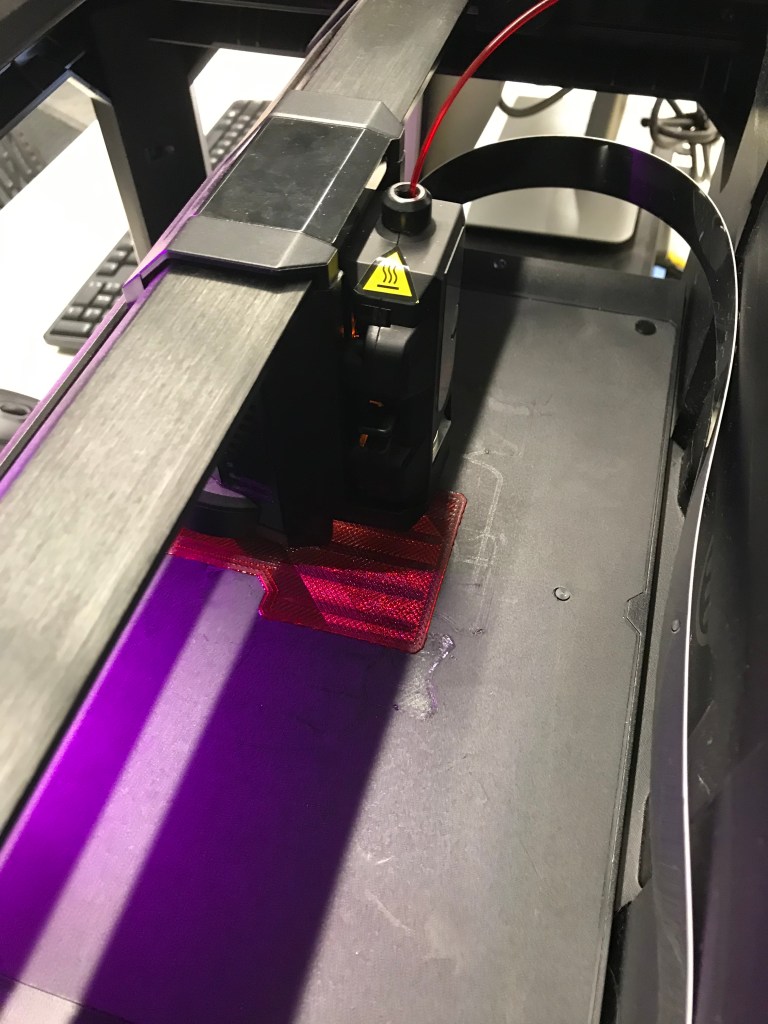
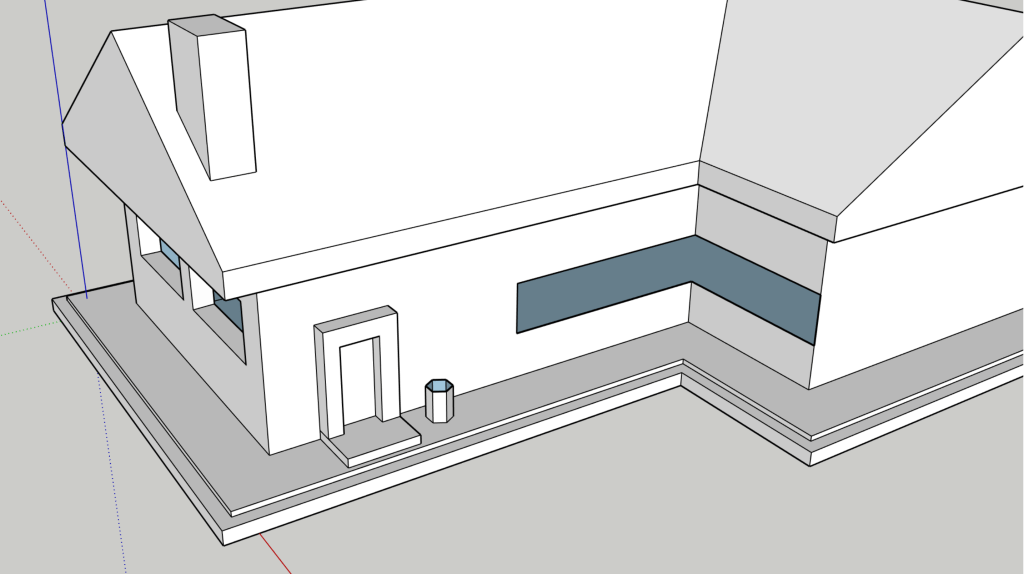
When introducing such processes in the classroom, Novak and Wisdom (2018) promote the need of guided explicit instruction. In the week 3 tutorial for EDUC3620, we were introduced to the world of 3D design through SketchUp software. Whilst I initially wished to explore the construction elements solo, barriers arose very quickly. Having the tutor guide us through the various controls enabled the development of a base of understanding. This ultimately led to more creative opportunities as I was able to build more elaborate designs. Through this experience, as well as being able to print using MQU Library’s 3D printer, made me feel more comfortable with learning and using technologies. 3D printing exploration has been found to improve preservice teacher’s self-efficacy and perceives competence in design and technology teaching standards (Novak & Wisdom, 2018).
CC BY Sophie Drago
Images of 3D printed house from SketchUp Design, using MQU Library 3D Printer.
It would be incredible to use a 3D printing project in Stage 2 or Stage 3 to support design and thinking capabilities. A learning experience that I have begun to generate centres around ‘Sustainability’ as a cross curricular priority combining STEAM disciplines. Enveloped in Stage 3 learning of weathering/erosion and natural disaster, or Stage ½ exploration of materials, students will explore preventative and intervention methods to aid the environment. Going through the design process, thinking critically and creatively along the way, they could construct and test prototypes of products to use in such situations. This would all be enables through the use of 3D design and printing technologies.
REFERENCES
Henriksen, D. (2017). Creating STEAM with Design Thinking: Beyond STEM and Arts Integration, The STEAM Journal, 3(1), Article 11. http://scholarship.claremont.edu/steam/vol3/iss1/11
Kaya, E., Newley, A., Yesilyurt, E. & Deniz, H. (2019). Improving Preservice Elementary Teachers’ Engineering Teaching Efficacy Beliefs With 3D Design and Printing, Journal of College Science Teaching, 48(5), 76-83. Available at: https://www.researchgate.net/publication/332736629_Improving_Preservice_Elementary_Teachers’_Engineering_Teaching_Efficacy_Beliefs_With_3D_Design_and_Printing
Novak, E. & Widsom, S. (2018). Effects of 3D Printing Project-based Learning on Preservice Elementary Teachers’ Science Attitudes, Science Content Knowledge and Anxiety about Teaching Science, Journal of Science Education and Technology, 27, 412-432. https://doi.org/10.1007/s10956-018-9733-5
Trust, T. & Maloy, R. W. (2017). Why 3D Print? The 21st-Century Skills Students Develop While Engaging in 3D Printing Projects, Computers In The Schools, 34(4), 253-266.: https://doi.org/10.1080/07380569.2017.1384684
 Sophie's Blog
One reply on “3D Printing and Design Thinking”
Interesting blog post, I too would like to see what 3D design/printing could look like in stage 2 and stage 3, as well as the potential benefits this may have as a foundation for deeper learning.
LikeLike