The STEM agenda necessitates the argument for including robotics learning in classrooms; STEM capabilities are highly sought out in modern societies (Valls, Albó-Canals, & Canaleta 2018). Robotics has the potential to authentically incorporate all of the STEM learning areas as well as boosting higher order thinking skills, problem solving, collaboration, divergent thinking and understanding and reasoning in multiple areas (Ntemngwa & Oliver, 2018; Eteokleous, Nisiforou & Christodoulou, 2020; Valls, Albó-Canals, & Canaleta 2018).
Robotics can also act as a real-world context for exploring and using computational and design thinking, particularly when creations serve a meaningful purpose. This boosts the transferability of knowledge and skills whilst upping engagement and motivation (Ntemngwa & Oliver, 2018; Eteokleous, Nisiforou & Christodoulou, 2020).
Curriculum Links: patterns and data, steps and decisions (algorithms), digital solutions, explaining how a solution meets a need
There are a variety of robotics kits and technologies that are currently making their ways into the classroom. Each have a variety of challenges and applications, and considerations must be made to align use to stage based outcomes and capabilities.
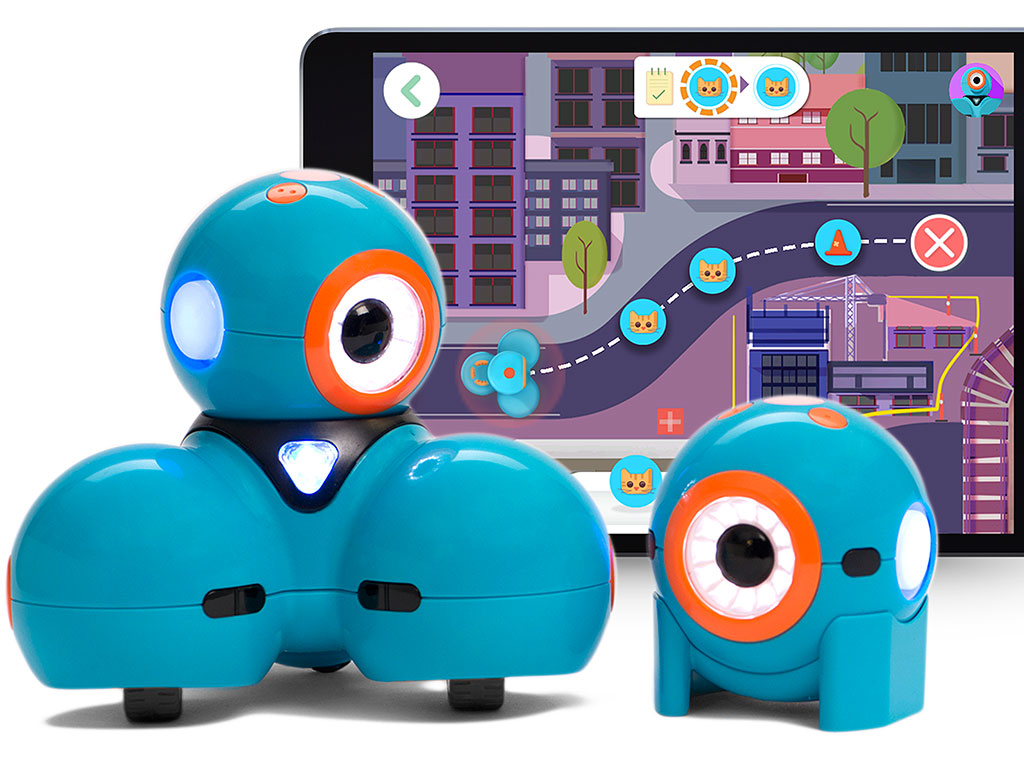
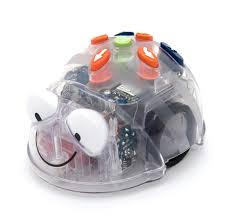
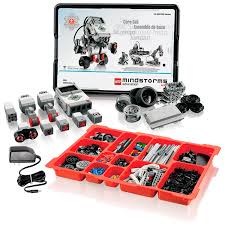
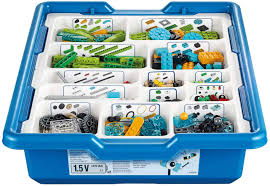
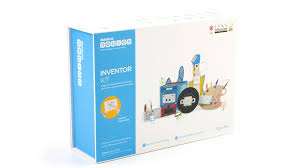
Technology attached to robotics learning should be easy to function, and let kids explore, create and expand their knowledge and skills in computational thinking and robotics.
Using Blue Bots in the Classroom
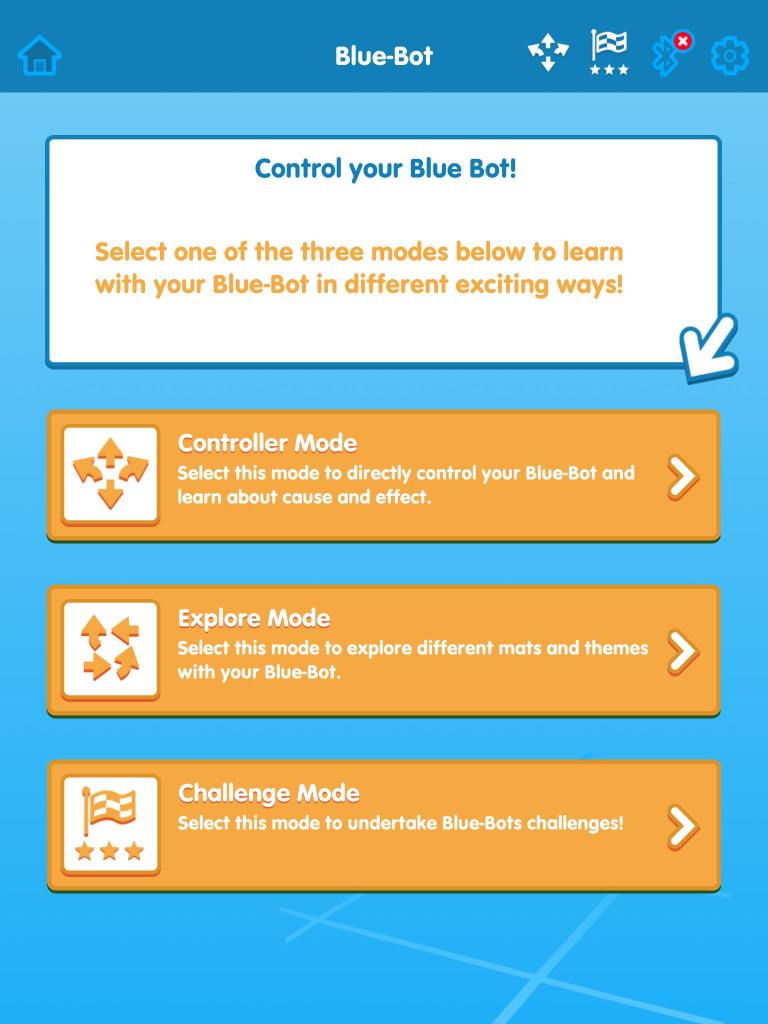
Blue Bots are programmable robots that can move forward and turn 90o and 45o. They are slightly more sophisticated than Bee Bots in that they can be programmed remotely through an app. This app also allows for the exploration of computational thinking challenges through simulation of the robots and grids. The tasks and associated learning allowed by the technology is suitable for students from Year 1, depending on the complexity of activities and design briefs.
One main challenge of using the app in isolation is that the programming aspect can be very abstract. It is better used as an extension of skill development, upon physical manipulation of the robots. Additionally, whilst Blue Bots are a great tool for developing computational thinking skills and programming capabilities, they do not have designated room for explicit creativity. Creative thinking can be accessed using the technology by developing obstacle courses, approaching problematic knowledge and challenging tasks, and linking use of the bots to other key learning areas.
The benefits of implementing robotics learning integrated with other key learning areas is evident. A connection to STEAM capabilities/disciplines saves time in an already packed curriculum (Valls, Albó-Canals, & Canaleta, 2018) as well as making learning more relevant to students therefore enhancing motivation and engagement (Ntemngwa & Oliver, 2018; Eteokleous, Nisiforou & Christodoulou, 2020). The seeming lack of creativity with Blue Bots can be mitigated through integration with other KLAs. For example, students could be tasked with using reused materials in an obstacle course, or observe other ways to reduce waste in programming the robots and associated tasks.
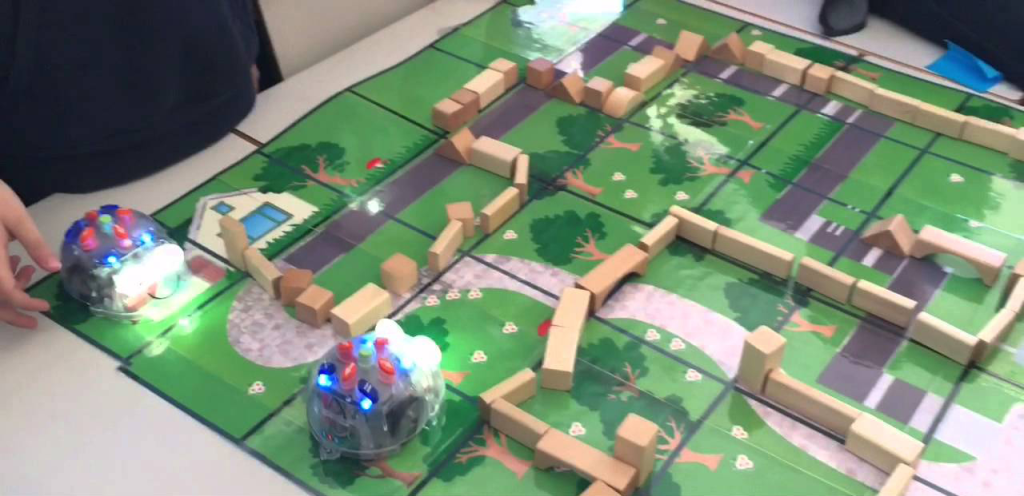
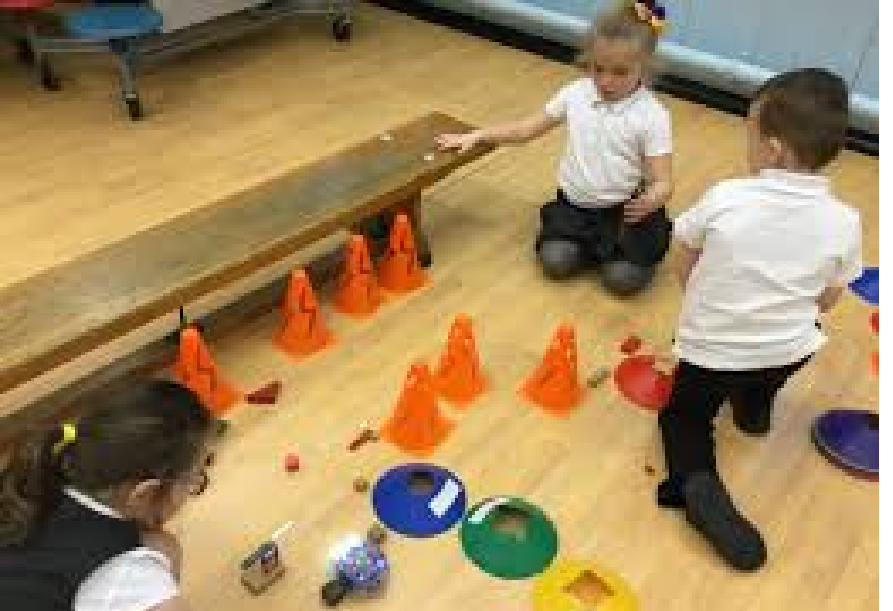
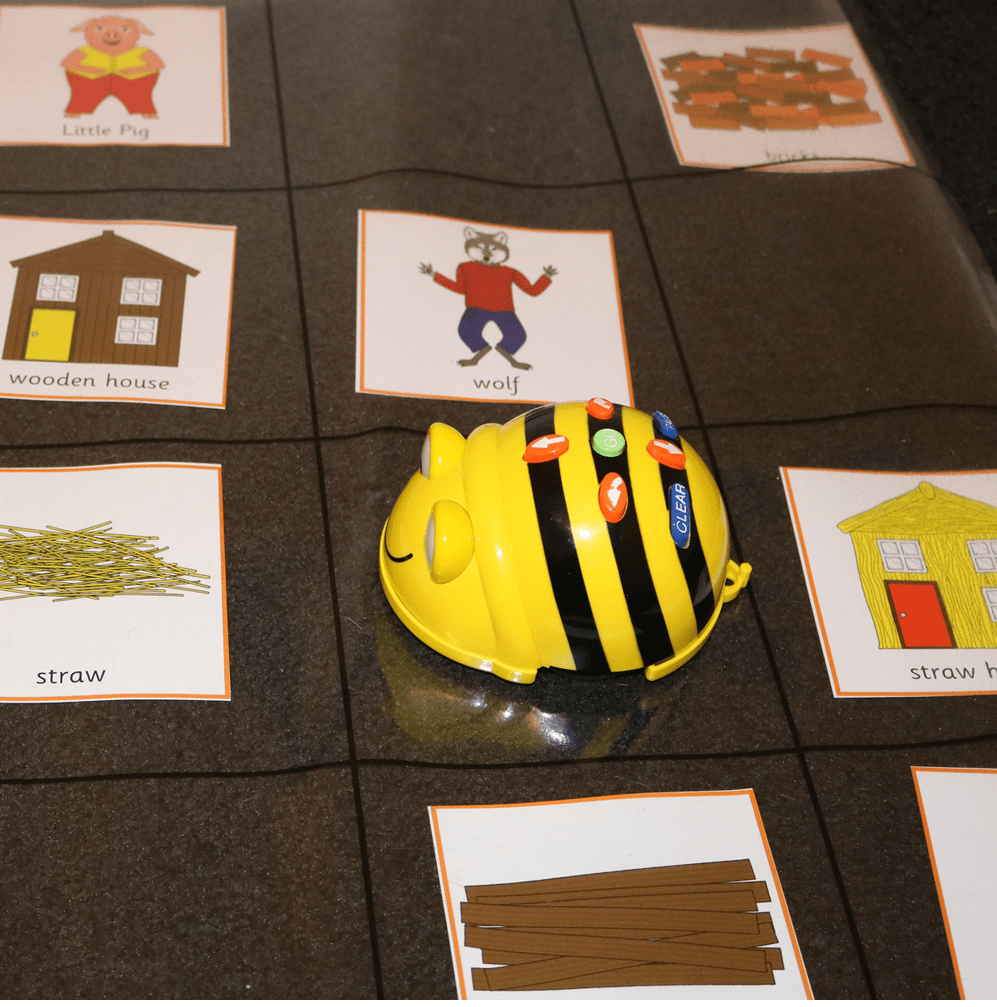
When integrating robotics into primary classrooms, teaching should center around constructionist and constructivist ideologies and place students at the middle of learning. Tasks should be projected based, where teachers act as facilitators and encouragers of discovery and persistence (Ntemngwa & Oliver, 2018). Creativity and artistic elements should be embedded in robotics learning experiences to enhance STEAM integration and reap the full benefits.
References
Eteokleous N., Nisiforou E. & Christodoulou C. (2020) Creativity Thinking Skills Promoted Through Educational Robotics. In: Moro M., Alimisis D., Iocchi L. (eds) Educational Robotics in the Context of the Maker Movement. Edurobotics 2018. Advances in Intelligent Systems and Computing, vol 946. Springer, Cham. https://doi-org.simsrad.net.ocs.mq.edu.au/10.1007/978-3-030-18141-3_5
Ntemngwa, C. & Oliver, J.S. (2018). The Implementation of Integrated Science Technology, Engineering and Mathematics (STEM) Instruction using Robotics in the Middle School Science Classroom. International Journal of Education in Mathematics, Science and Technology (IJEMST), 6(1), 12-40. DOI:10.18404/ijemst.380617
Valls, A., Albó-Canals, J. & Canaleta X. (2018) Creativity and Contextualization Activities in Educational Robotics to Improve Engineering and Computational Thinking. In: Lepuschitz W., Merdan M., Koppensteiner G., Balogh R., Obdržálek D. (eds) Robotics in Education. RiE 2017. Advances in Intelligent Systems and Computing, vol 630. Springer, Cham. https://doi-org.simsrad.net.ocs.mq.edu.au/10.1007/978-3-319-62875-2_9
 Sophie's Blog
2 replies on “Robotics”
Hi Sophie!
Your blog post is very insightful and thought-provoking. You raise great ideas on ways to overcome the limited creativity of Blue Bots. I like your idea of combining robotics with other KLAs and tasks that lend themselves to using more creativity. Going off your suggestion to use Blue Bots for reducing school waste, students could program them to categorise items into paper, plastic or non-recyclables. There are so many benefits that you have brought up, I hope to use Blue Bots in the classroom someday.
Well done!
Natalie
LikeLiked by 1 person
Hi Natalie,
Thanks for your comment! That’s an incredible idea for implementation. It definitely boosts the authenticity and application of learning which us great. I’m so excited to hopefully put them in place in the future as well.
Sophie 🙂
LikeLike